Adolescent Orbit

By Jeffrey MacLachlan
Zadie Smith published an essay in The New Yorker about her miserable pre-9/11 adolescence, and I connected with her recollections of drafting eulogies. While I did not compose anything for my future celebration of life, I did contemplate the musical playlist. For the record, a steady diet of The Smiths and Radiohead would dour the reception room with Fiona sprinkled here and there for jazzy interludes.
I also, like Smith, had no intention to commit suicide because adolescence was an artificial orbit in which I would not be trapped.
I found little connection with the rest of the essay. She accidentally slipped out of a bedroom window while smoking to elude maternal detection. She then has an argument with her teen-self: “She says, All you are ever saying in your ‘work’ (eye roll) is the same two things I was saying [on the day of the fall]: (a) Time is not what we think it is. and (b) Neither is volition.”
Smith has a younger shadow self whom she tries to impress for some reason. She also misses the illicit thrill of a disguising nicotine addiction. I hold no such notions. This is the first time I have revisited my adolescent orbit without the space suit of fictional characters. When I see my teen-self walking in paranoid fear of school violence and homophobic slurs, it just saddens me that what transpires is something that cannot be changed. I do not want to bother him. He certainly would not sass me back. I catch his eye in the hallway. He looks away rapidly hoping I am not an additional threat.
If my teen-self read my work, he would probably be astonished. He did not know you could write as a job, and he had never met a professor, so he had no idea what that career was even like. He was mostly nostalgic for his early childhood. That time in his life was mostly happy or at least peaceful. I remember being especially miserable on Christmas in eighth grade because that fall semester was particularly scarring and when Christmas morning did not live up to my early childhood recollections, I was unpleasant to be around, and I knew it.
I had forgotten to get my mother a present. Did I mean to do that of my own volition? Was it a subconscious resentment for a move I never wanted? Either way, it really hurt her.
I still attended the dances of my previous school despite not going there and I knew after this next semester, those monthly Saturday nights where I still had a social life would come to an end and then it would be four uninterrupted grades of torture.
Near the end of the essay, Smith says, “Sometimes I ask myself: What would teen-age me do with her misery now? [...] Whatever else I used to think about time, for example, the one thing I never had to think about was whether or not there would be enough of it, existentially speaking.”
This is a question I have never asked myself. I get more satisfaction from one day of teaching than I did out of the entirety of my teenage years. While I lacked a sophisticated perception of time, I also resented having so much of it. I remember watching Dead Poets Society and yearning to be transferred to an extravagant school where students more or less got along and focused on academics. Those boys possessed a purpose that I lacked since it was exhausting just
to get through the day. Now I cannot squander an entire day because I have so many projects to write and book stacks to tackle.
I am a free man.
A student asked me what I thought of Dead Poets Society, and I told her that I just remembered being jealous of the characters even though one of them ends their life. She asked me to watch it again and report back my findings. John Keating misinterprets Frost which made me wince like a second mezcal shot. The school’s administration is set up to be the villain as they repress the creativity of Keating and his white charges. As someone who is aware that school authorities can be mediocre adults, I expected to detest them now that I am a teacher. Instead, I felt sympathy for them. If they encouraged free expression and creativity among the students, then the students might break their orbits before they reached maturity. This is not what parents expect for a quarter million dollars adjusted for inflation. They expect raw adolescence refined into Ivy League dossiers.
Another thing that surprised me is that I remembered the final scene as every student banding together in honor of their unemployed instructor. Instead, roughly half of the class stands atop expensive desks in solidarity. The other half sit glumly, exposing them as only pretending to have enjoyed Keating’s teaching style because they solicited positive assessments. When he no longer governs their grade point average, he matters little to their ambitions. This is a more nuanced conclusion to the film because it critiques students who are admitted to elite institutions and who will likely influence foreign policy as adults.
In Privilege by sociologist Shamus Rahman Khan, he chronicles the years when he lived a Keating-esque life as an instructor at a private academy he attended as a teenager. During his first back-to-school assembly as a faculty member, Khan observes, “The seniors closest to me knew that next year the college they were most likely to attend was Harvard—almost a third of them would be at the Ivy League, and nearly all of them at one of the top colleges in the nation. And college placement was merely the next step in their carefully cultivated lives. [...] they would be [...] a member of a group of graduates who occupied powerful positions throughout the world.”
While students like me took standardized exams about how history had been shaped, these students would someday do the shaping. American capitalism immerses the children who benefit from the system to then manage the system. According to Politico, seventeen percent of all influential staff members in the Biden White House graduated from Harvard. Fourteen percent of all influential staff members graduated from Yale, including national security advisor and chief of staff for the National Security Council.
Jake Sullivan, the national security advisor, has made statements about Palestine that disputes the intellectual benefits of elite education. When asked why the Biden administration does not support a ceasefire despite the unfolding genocide in Gaza, Sullivan said, “A humanitarian pause would be a good thing to get hostages out, but you can bet that Hamas will try to use that time to their advantage as well.” When pressed if the genocide is a war crime, Sullivan replied, “Look, I’m not going to react or to comment on every report that we see. There’s a lot of fog in war.”
Thanks to transcendent critical thinking skills acquired at Yale, Sullivan predicts that a ceasefire will absolutely benefit Hamas, and therefore it should be off the table. However, it is too rigorous to determine if forty-two thousand women and children dismembered by American munitions is a war crime because no one can calculate that moral uncertainty.
In Excellent Sheep by William Deresiewicz, he reflects on his time as a Yale professor. He says, “I taught many wonderful young people during my years in the Ivy League—bright, thoughtful, creative kids whom it was a. pleasure to talk with and learn from. [...] Very few were passionate about ideas. Very few saw college as part of a larger project of intellectual discovery and development, one that they directed by themselves and for themselves.”
I was not always the best student. One of my flaws was that if I was not interested in the material or did not connect with the teacher, then I would lose motivation and float past deadlines. This was due to a combination of overall distrust in educational institutions and youthful inertia. Despite these flaws, I always saw education as partly self-directed. I remember in my first creative writing class in community college, the professor asked on the first day what we were currently reading. At the time, the answer for me was The Amazing Adventures of Kavalier and Clay. I remember thinking there was a lot of stuff I was probably missing but it looked important at my local Borders, so I gave it a shot. Another student in class looked flabbergasted as others discussed their answers. “Do people actually read books outside of classes!?” like a self-directed education was cheating in some fashion.
A student mentions to Deresiewicz, “It’s hard to build your soul when everyone around you is trying to sell theirs.”
This is what a proper education entails—the slow care of soul construction prior to launching into the stratosphere. Obviously, you want to be employable to avoid poverty’s humiliations in a merciless capitalist system, but you also do not want labor’s gravity to crush your spirit. I remember when working technical support at an AT&T call center in Lubbock, TX and my lunch breaks involved escaping to a dismal courtyard to read 2666 by Roberto Bolaño. These half-hour forays into Bolaño’s dream universe helped protect a mind invaded by alien phone calls needing help sending explicit picture messages.
I teach Bolaño in my own courses, hoping his imaginative universe reminds students that no matter what job they might procure, to never stop dreaming of space.
Meet the author
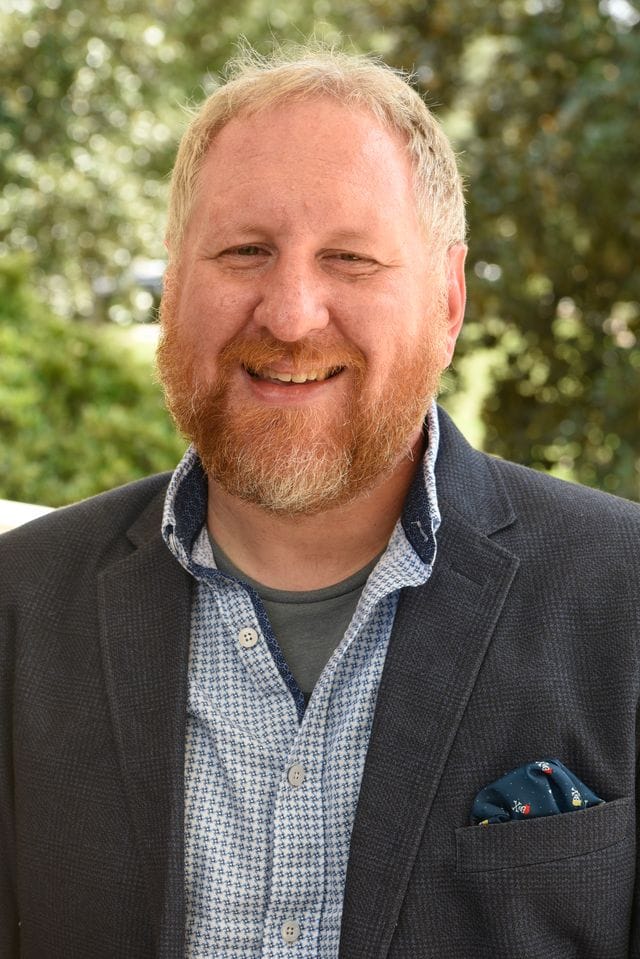
Creative non-fiction piece about revisiting my adolescence and how I protected myself during trying years. Short bio: Jeffrey H. MacLachlan also has recent work in New York Quarterly, The Columbia Review, HAD, among others. He is a Senior Lecturer of literature at Georgia College & State University.